
Understanding Asthi Visarjan
The immersion of ashes is, for many families, the final rite of the funeral — a quiet act of letting go.
Updated 4 minute read
What it means
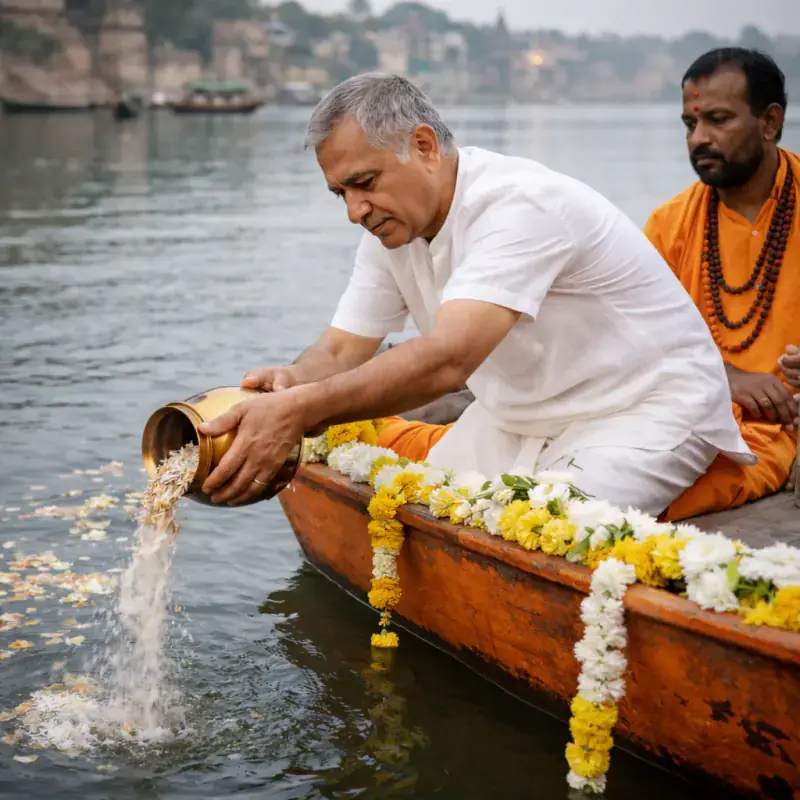
Asthi Visarjan is the immersion of the ashes and bone fragments remaining after cremation into flowing water. In Hindu tradition it is understood as returning the body’s elements to nature and helping the soul on its journey. Many Sikh families also immerse ashes in flowing water.
When it is done
The ashes — often called phool — are collected from the cremation ground, commonly on the third day or another day set by family custom. Some families perform the immersion within days; others wait for a particular date or until relatives can travel.
Where families go
Haridwar, on the Ganga, is one of the most common places for families in and around Delhi. Garhmukteshwar, Prayagraj and Varanasi are also widely chosen, and many families have a traditional place connected to their ancestors.
Planning with care
- Carry the ashes in a clean cloth bag or urn, as your pandit advises
- Plan travel so that elders are not rushed
- Immerse only the ashes and natural flowers — avoid plastic and synthetic materials
- Ask your pandit which prayers will be performed and what the family needs to bring